-
The Belt of Truth: What Is Actually True?
The Belt of Truth is the foundation of the Christian life because every battle begins with what we believe. Truth is not something we create but reality as God reveals it in Christ. As our minds are renewed by Scripture, we learn to reject deception, live with integrity, and stand firm against the enemy. Continue reading
Agency, Apostle John, Apostle Paul, Armor of God, C.S. Lewis, Christianity, Ephesians 6, Epictetus, Faith, God, Humility, Jesus, King David, Quotes, Reality, Renewing the Mind, Saint Augustine, Sincerity, Spiritual Discipline, spiritual warfare, The Waterboys, The Whole of the Moon, Thomas A Kempis, truth, Virtue, William Gurnall -
Born Into A War
The battle for your soul is real, whether you recognize it or not. Born Into a War pulls back the curtain on the unseen spiritual conflict described throughout Scripture, revealing how deception, distraction, and drift shape our lives—and introducing the armor God has given us to stand firm in Christ. Continue reading
Agency, Apostle Paul, Apostle Peter, Armor of God, C.S. Lewis, Character, Christian Formation, Christian Living, Discipleship, Faith, God, identity in Christ, John Mark Comer, Personal Development, Prayer, Prophet Elisha, Prophet Isaiah, Quotes, Spiritual Disciplines, spiritual warfare, truth, U2, William Gurnall -
Avoidance, Agency, and the Hard Work of Engagement
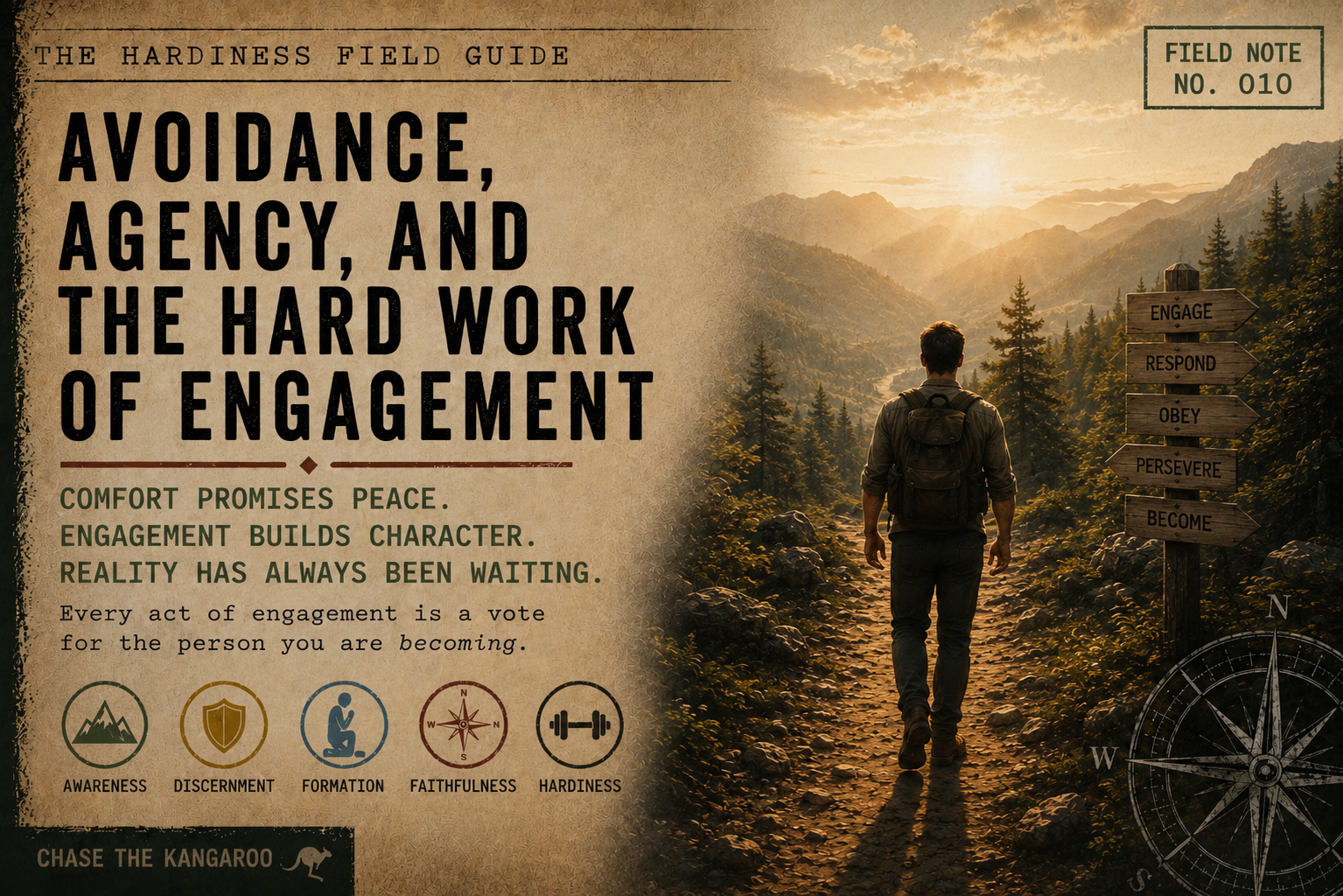
Avoidance rarely looks like fear—it usually looks like tomorrow. Drawing from The Hardiness Effect, Scripture, Viktor Frankl, C.S. Lewis, the Desert Fathers, and timeless Christian wisdom, this field note explores how avoidance diminishes agency and how faithful engagement forms courage, responsibility, and resilient character one decision at a time. Continue reading
Acedia, Agency, Avoidance, C.S. Lewis, Character, Christian Living, Courage, Discipleship, Dr. Paul Taylor, Habits, John Mark Comer, Jordan Peterson, mental-health, Personal Development, Personal Growth, Resilience, Spiritual Disciplines, Spiritual Formation, The Hardiness Effect, Viktor Frankl, Virtue -
The World That Trains Us

We are shaped long before we realize it. Drawing from The Hardiness Effect, Augustine, James K.A. Smith, Pascal, and Scripture, this field note explores how ordinary habits quietly train our loves—and how intentional practices can retrain our hearts toward what is true, good, and beautiful. Continue reading
-
Recovery in Plain Sight: Movement, Sunlight, Sleep, and Nature
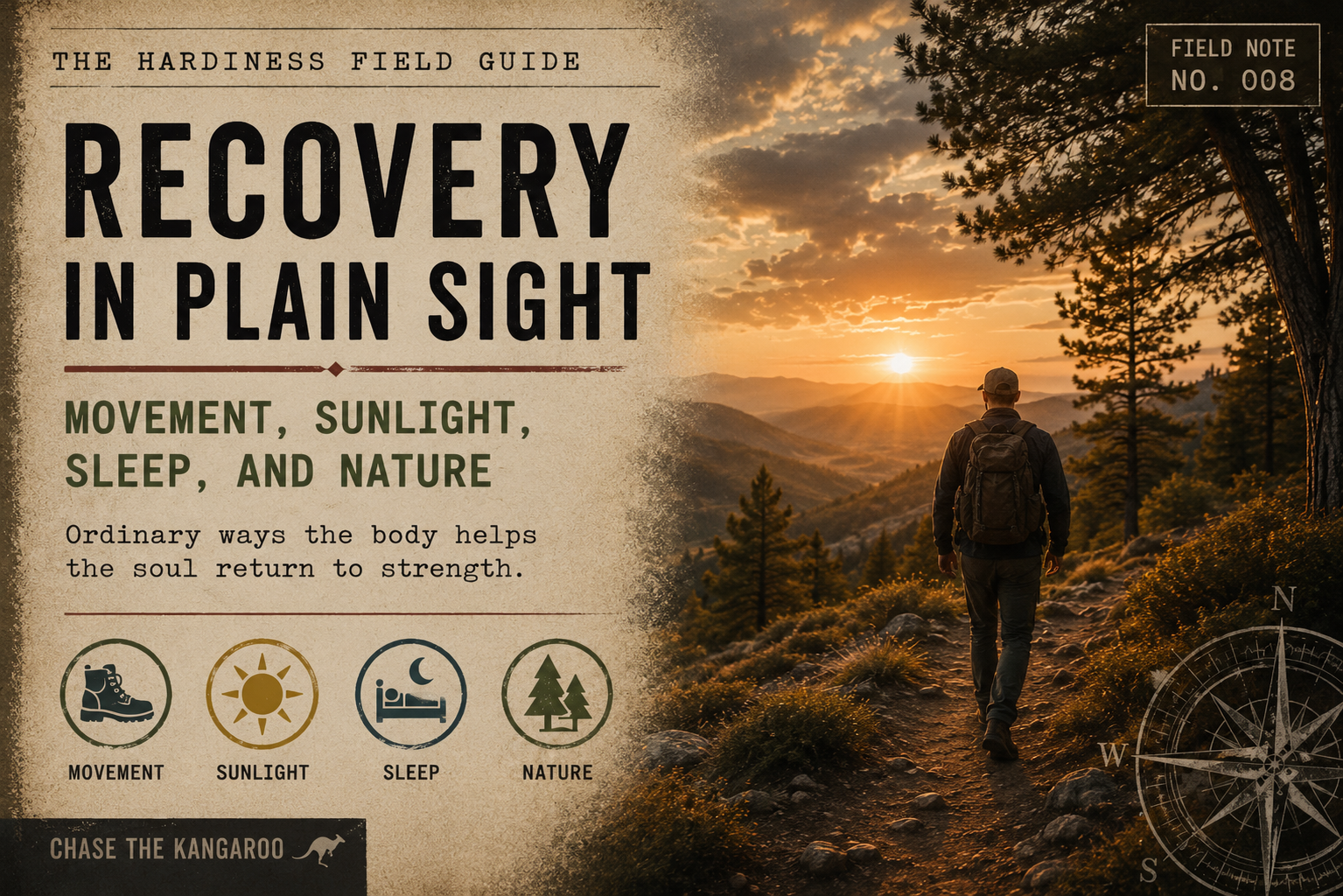
Recovery is not escape from hardiness. It is part of how hardiness is built. This CTK essay explores movement, sunlight, sleep, and nature as ordinary gifts that help the body and soul return to rhythm, presence, and strength before pressure becomes wear and exhaustion becomes the atmosphere. Continue reading
-
The Practice of Resistance: Stress Adaptation and the Life of the Soul

Stress adaptation is more than a performance idea. Drawing on Paul Taylor and the traditional spiritual disciplines, this CTK essay explores how fasting, silence, Sabbath, simplicity, and prayer use manageable resistance to reveal appetite, noise, hurry, and control, training us to become more available to God under pressure. Continue reading
Agency, Appetite, Attention, Brother Lawrence, C.S. Lewis, Chosen Friction, Comfort as Formation, Dallas Willard, Digital Distraction, Discipline, Dr. Paul Taylor, Faith, Fasting, Hardiness, John Mark Comer, Prayer, Recovery, Resistance, Silence, Simplicity, Spiritual Formation, The Good Pressure, The Hardiness Effect, Virtue -
The Harder Road: Hercules at the Crossroads and the Path of Aretê

Hercules at the Crossroads gives mythic shape to an ordinary truth: repeated choices become a road, and the road forms us. Drawing on Paul Taylor, C.S. Lewis, John Mark Comer, Brother Lawrence, and Christian wisdom, this CTK essay explores Kakia, Aretê, grace, attention, and the harder path toward human wholeness. Continue reading
-
Challenge, Control, Commitment, Connection: A Field Guide for Hardiness

Hardiness has a shape: challenge, control, commitment, and connection. This CTK essay explores Dr. Paul Taylor’s Four Cs as practices for standing steady under pressure, recovering agency, resisting drift, and staying rooted in community. A practical Four-C Audit helps readers move from reflection to action. Continue reading
