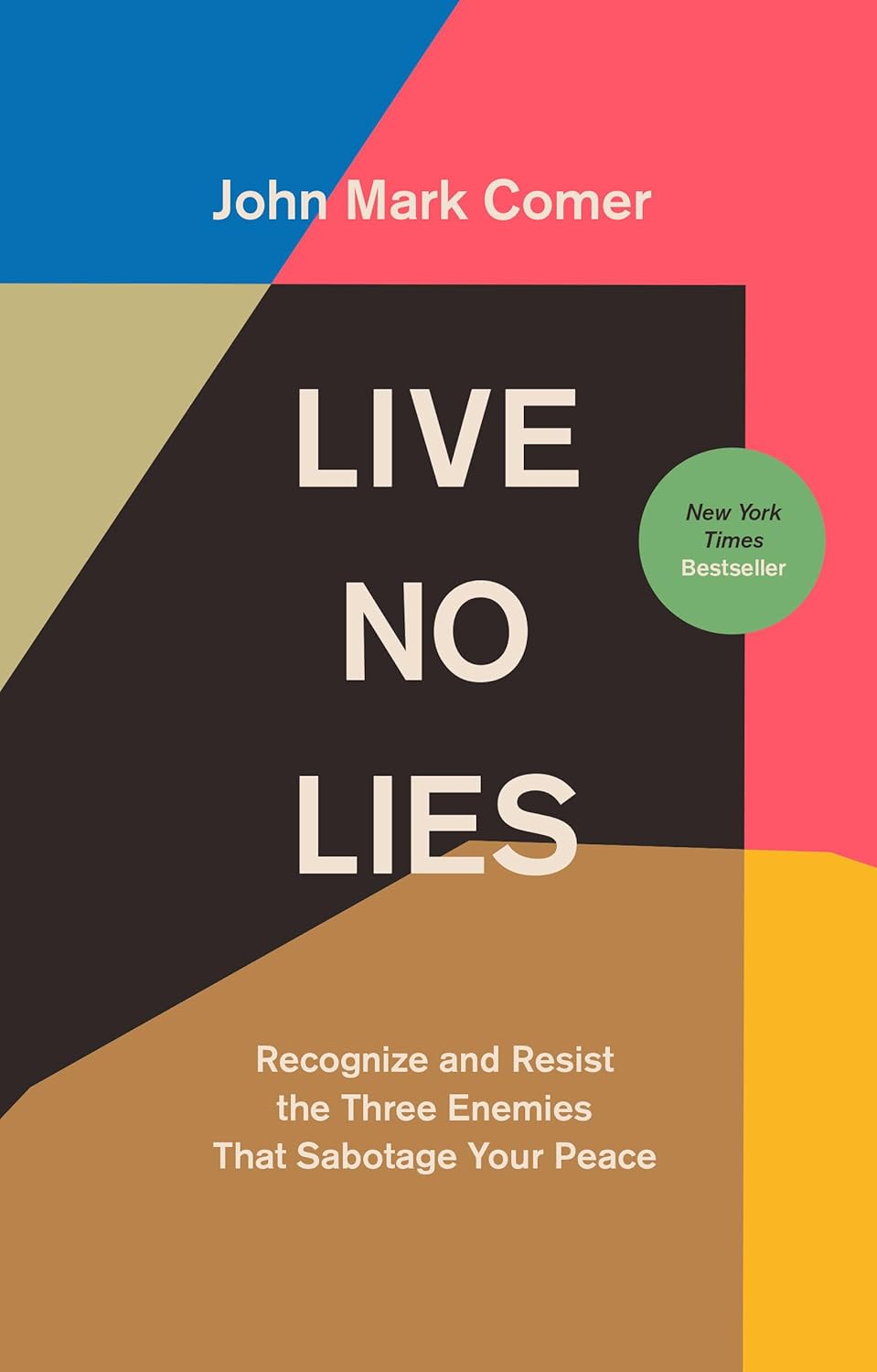
Occupied Territory: What Live No Lies reveals about erosion, comfort, and quiet agreement
”During this earthly pilgrimage our life cannot be free from temptation, for none of us comes to know ourselves except through the experience of temptation, nor can we be crowned until we have come through victorious, nor be victorious until we have been in battle, nor fight our battles unless we have an enemy and temptations to overcome.” ~Saint Augustine
Modern distraction rarely feels dangerous. It feels normal. Productive. Even necessary. And yet over time, comfort culture and constant input quietly shape our spiritual formation in ways we hardly notice.
I didn’t finish Live No Lies feeling corrected.
I finished it feeling exposed.
Not because John Mark Comer told me something new, but because he named something I had stopped guarding.
That difference matters.
I didn’t assume neutrality. I was lulled into it.
Little by little, without any clear moment of surrender, I grew accustomed to what once would have unsettled me. The pace of media. The constant inputs. The background noise of outrage, desire, anxiety, and convenience. None of it felt dramatic enough to resist. None of it felt dangerous enough to confront. It just felt normal.
And that’s the point.
Formation Doesn’t Announce Itself
Comer’s central framework is tidy. Almost deceptively so.
Lies lead to disordered desires.
Disordered desires harden into destructive habits.
It’s clean. It’s direct. And it lands because it doesn’t start with behavior. It starts with agreement.
That’s where the book pressed closest for me.
I’ve spent enough time thinking about formation to know that we are always being shaped. What I hadn’t reckoned with was how often I had stopped questioning the stories I was absorbing, the assumptions I was entertaining, the small internal concessions I was making in the name of comfort, efficiency, or staying informed.
Formation does not announce itself. It accumulates.
If attention shapes desire, and desire shapes habit, then modern distraction is not neutral. It is formative.
The question shifts from, “Am I doing anything wrong?” to something quieter and more unsettling:
What am I becoming?
Why Good Intentions Fail
Most people do not abandon their values. They fail to structure their lives around them.
That is why good intentions fail.
We intend depth. We intend presence. We intend discipline. But intention without design is fragile. It bends under fatigue. It collapses under convenience.
Comfort culture trains us gently. Ease over effort. Stimulation over silence. Speed over reflection.
No dramatic fall is required. Only repetition.
You do not wake up indifferent. You wake up slightly more distracted than yesterday. Slightly less resistant. Slightly more accustomed.
Good intentions, left unexamined, lose ground.
Lies Beneath the Habit
Comer’s framework is simple and devastating:
Lies shape desire.
Desire shapes habit.
The power of that structure is that it does not start with behavior. It starts with agreement.
I did not adopt lies outright. I stopped objecting.
The lie that constant information equals responsibility.
The lie that comfort is harmless.
The lie that distraction is manageable.
None of these were embraced in open rebellion. They were absorbed through exposure.
Repeated ideas become believable. Believable ideas shape desire. Desire directs attention. Attention builds habit.
This is spiritual formation, whether we intend it or not.
Occupation by Consent
The language of war in Live No Lies is not theatrical. It is sober.
The soul is contested ground.
Occupation does not always arrive by force. More often it comes by consent. Quiet consent. Gradual consent.
You do not notice the erosion because nothing is taken all at once. Attention is surrendered in minutes. Convictions soften through repetition. Resistance fades because everything still works.
Life remains functional.
That is what makes it dangerous.
What Is a Rule of Life
Across history, when people recognized that formation was inevitable, they responded with structure.
A Rule of Life is not a performance plan. It is not legalism. It is not an aesthetic.
It is a deliberate pattern of practices designed to guard attention, stabilize desire, and shape spiritual formation over time.
Structure chosen in advance prevents erosion in moments of fatigue.
A rule creates rhythm. Rhythm steadies desire. Steady desire strengthens attention.
Without structure, formation defaults to the loudest voice in the room. Today that voice is speed, outrage, and convenience.
A Rule of Life does not guarantee depth. It makes drift harder.
Reclaiming Ground
Erosion does not feel catastrophic. It feels manageable.
That is why it spreads.
If your spiritual life feels fragmented, if your attention slips more easily than it holds, if your practices rarely align with your intentions, you are not uniquely weak. You are living in an age engineered for distraction.
But erosion is reversible once named.
Agreement can be revoked.
Occupied territory can be reclaimed.
Not through intensity.
Not through outrage.
Through design.
Spiritual formation is sustained by rhythm. By restraint. By deliberate resistance to what feels easy but shapes quietly.
Read the book. Then examine the agreements you have made with comfort, distraction, and speed.
Design a life that resists erosion instead of assuming immunity to it.
Good intentions are not enough.
Formation requires design.


 Chase The Kangaroo
Leave a reply to Goodreads – Chase The Kangaroo Cancel reply