Holding the Line When Drift Is Easier
It shows up first at home.
Not in the big moments. Not in vows or milestones. But in the small exchanges that don’t make it into memory. A question asked twice. A tone sharpened by fatigue. The impulse to withdraw rather than stay present when patience runs thin.
I felt it in my marriage before I could name it anywhere else. A subtle shift. Less steadiness. More reactivity. The work still getting done, the days still moving forward, but something essential beginning to fray at the edges. Not failure. Drift.
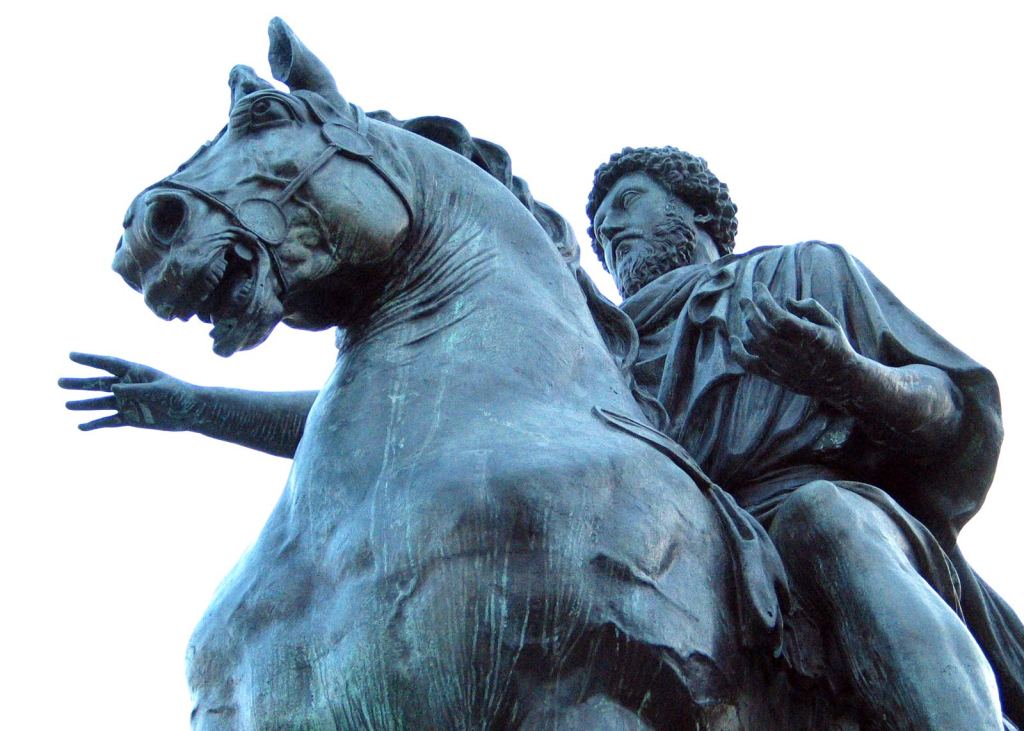
That was the frame of mind I was in when I returned to Meditations. Not for inspiration, and certainly not for advice on marriage, but for clarity about governance. His insistence is relentless: a man is responsible first for the state of his own soul. Before correcting, before instructing, before asserting, he is called to rule himself.
In the quiet moments at home, that demand becomes unavoidable. Character is revealed not in strength, but in restraint. In choosing to listen instead of defend. In absorbing frustration without passing it on. In staying when withdrawal would be easier.
Modern culture prefers a louder version of manhood. Visible strength. Expressed conviction. Recognition. But Aurelius keeps returning to a quieter measure. A man’s true work, he insists, is internal. The discipline to hold his line. The willingness to accept discomfort without complaint. The resolve to act according to principle rather than mood.
That idea unsettled me. Not because it was new, but because it was familiar in the way truths are when we’ve let them slip.
Character as Bearing
Character is often described as a list of traits. Integrity. Courage. Discipline. Patience. Useful words, but incomplete. They describe what a man values without explaining how he holds those values under pressure.
A better way to understand character is as bearing.
Bearing is orientation. It is the internal alignment that keeps a man pointed true when conditions shift. When fatigue sets in. When recognition disappears. When comfort or self-justification offer an easier route. Bearing determines whether a man drifts or holds his line.
This is where Stoic thought sharpens the picture. The concern is not temperament, but governance. Who is in charge when impulse presents itself as reason. Whether mood dictates action, or a higher standard does.
Bearing is tested in ordinary moments. Not crisis. Not heroics. The unobserved decisions where nothing dramatic is at stake, yet everything is being formed. How a man speaks when tired. What he tolerates in himself. Whether he chooses restraint when indulgence would go unnoticed.
Without bearing, principles become decorative. They read well but fail under sustained pressure. A man may know what he believes and still lack the discipline to live in alignment with it. Over time, that gap widens. Drift sets in quietly.
Character, understood this way, is less about intensity and more about steadiness. Less about force and more about fidelity. It is the slow work of ordering one’s interior life so that action follows conviction, not convenience.
What Modern Culture Avoids
Modern culture is not hostile to character. It is indifferent to the conditions required to form it.
We admire outcomes. Confidence. Visibility. Conviction. We reward the appearance of strength and the language of authenticity. But we have little patience for the quieter disciplines that make those things durable.
What we avoid most is restraint.
Restraint slows expression. It asks a man to pause, to measure, to govern himself rather than discharge whatever he feels. In a culture that prizes immediacy, restraint is mistaken for weakness. Without it, strength becomes volatility and conviction hardens into noise.
We also avoid silence.
Silence leaves no record. It denies the impulse to be seen and validated. Yet silence is where judgment sharpens and impulse loses authority. A man who cannot be quiet with himself rarely governs himself well in public.
Duty, too, has fallen out of favor.
Duty binds a man to responsibility whether he feels inspired or not. Culture prefers passion. Passion is expressive and energizing. Duty is steady and uncelebrated. But only duty sustains long obedience when novelty fades.
And perhaps most of all, we avoid obscurity.
Obscurity offers no applause. No metrics. No affirmation. It exposes whether a man’s standards are internal or dependent on response. Character formed in obscurity rarely impresses in the moment, but it proves reliable over time.
What replaces these disciplines is thinner. Louder. Less stable. And over time, the absence shows.
The Inner Cost of Choosing Character Anyway
Choosing character is rarely dramatic. More often, it is quietly expensive.
It costs the satisfaction of immediate release. The sharp word swallowed. The correction withheld. The impulse restrained. These moments do not feel virtuous in the body. They feel unresolved. Character asks for containment.
There is also the cost of loneliness.
When a man orders his inner life, he has fewer places to hide. Blame becomes harder to outsource. Excuses lose their usefulness. Responsibility settles inward. The work becomes solitary, not because others are absent, but because it can no longer be shared.
Character also demands endurance in boredom.
Consistency lacks novelty. The same disciplines. The same standards. The same refusals. Day after day. Formation happens through repetition, and repetition rarely feels rewarding.
Then there is the cost of obscurity.
Much of this work goes unseen. No audience. No acknowledgment. No confirmation that it matters. A man choosing character must accept that the most important changes will be invisible, known only by their effects over time.
Perhaps the hardest cost is this: character does not remove resistance. It requires a man to live with it.
The pull toward ease does not vanish. Irritation still arises. Self-justification still presents itself as reason. The difference is not the absence of struggle, but the decision to remain governed rather than reactive.
This work narrows options. It closes exits. But it also produces something rare. A man who can be trusted to hold his line when it would be easier not to.
Closing Charge
A man does not drift into character. He drifts away from it.
Holding the line requires intention. Daily. Often quietly. Often without reinforcement. The work is not to become exceptional, but to remain governed. To choose restraint when release would be easier. To accept discomfort without complaint. To act according to principle rather than mood.
This is not a call to be louder, harder, or more visible. It is a call to be ordered.
The measure of a man is not found in how forcefully he speaks or how convincingly he presents himself, but in whether his inner life is aligned with the standards he claims to live by. Especially where no one is keeping score.
Formation happens there. In the ordinary hours. In the unobserved decisions. In the steady refusal to surrender authority to impulse or appetite.
There is no applause for this work. No finish line. No recognition.
Only the responsibility to hold your bearing. And the quiet confidence that comes from doing so.
“You have power over your mind, not outside events. Realize this, and you will find strength.”
~ Marcus Aurelius
Character holds the line, but it does not choose the direction. Discipline without orientation eventually becomes endurance without meaning. Bearing must be named before it can be kept. The work of self-governance steadies a man, but it is clarity of direction that tells him where he is headed. That choice comes first.


 Chase The Kangaroo
Leave a reply to Choosing a Bearing – Chase The Kangaroo Cancel reply