Companion article to Virtues Series | Week 8 – Justice
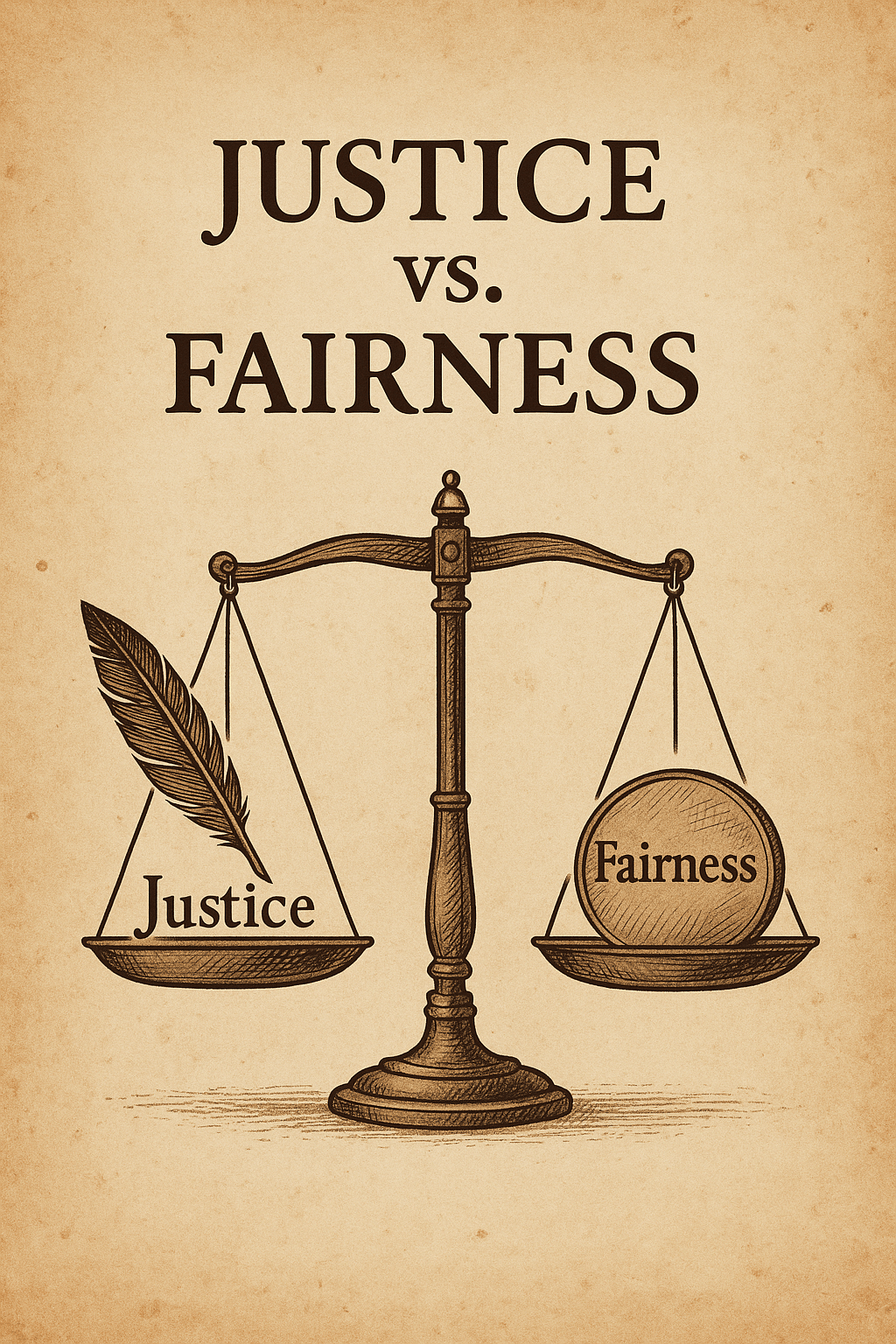
Fairness is one of those words that feels noble but often conceals a deeper confusion. We reach for it when something feels unequal, but equality and justice are not the same. Fairness asks that all be treated alike. Justice asks that all be treated rightly.
Justice, as Franklin and the ancients conceived it, is anchored in moral order. It asks what is right according to truth, virtue, and proportion. Fairness, as modern culture tends to use the word, asks what is equal according to feeling or appearance. That is a significant departure.
When fairness becomes the ultimate good, society begins to prize sameness over rightness. The result is a confusion between equality of worth—which justice affirms—and equality of outcome—which justice does not guarantee. Justice recognizes distinctions: of effort, virtue, circumstance, and responsibility. Fairness, pursued to its extreme, erases them.
This cultural drift toward fairness often carries a collectivist or socialist undertone—not strictly economic, but moral. When fairness replaces justice, personal agency weakens. Responsibility shifts from individual conscience to impersonal systems. The state or institution becomes the arbiter of what is “fair,” rather than the person discerning what is “just.”
C.S. Lewis warned of this in The Abolition of Man: the loss of objective moral truth in favor of emotional preference and bureaucratic control. What begins as compassion can end as coercion. The machinery of fairness may run smoothly, but it runs without a soul.
Franklin’s vision was precisely the opposite. His justice depended on self-governed virtue, not state-managed equality. It assumed that a free and moral people could discern and act rightly without coercion. Justice, in that sense, safeguards liberty. Fairness, detached from truth, can become its substitute—and eventually, its undoing.
Fairness belongs to systems. Justice belongs to souls. Systems can enforce fairness, but only people can practice justice. And when people cease to practice it, no system can replace what has been lost.
Franklin’s wisdom still speaks clearly: “Wrong none by doing injuries, or omitting the benefits that are your duty.” That duty begins where fairness ends—with the courage to discern and to do what is right, even when it is not equal. Companion article to Justice of Franklin’s Virtue Series.


 Chase The Kangaroo
Leave a reply to Virtue Series | Week 8 – Justice – Chase The Kangaroo Cancel reply