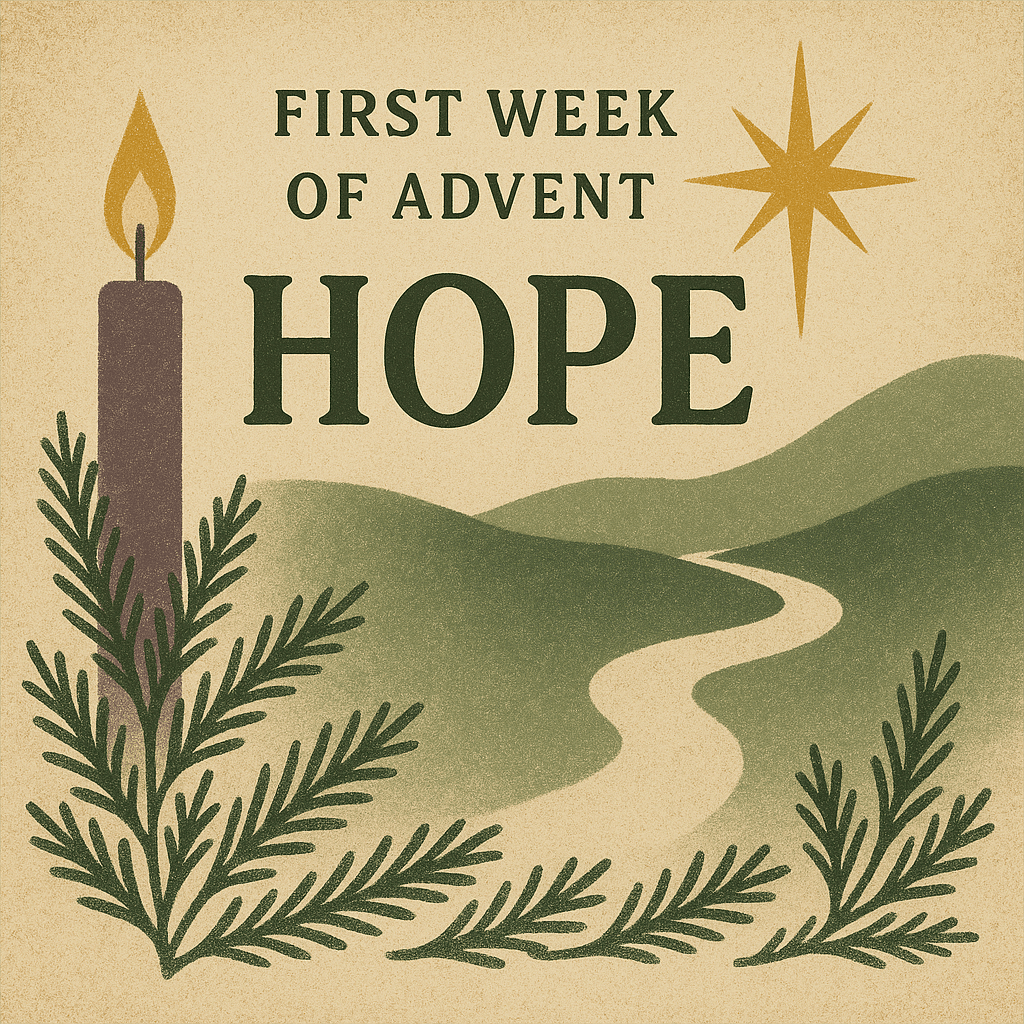
Learning to See in the Half Light
The tires whispered over the moist tacky ground. The air was sharp enough to sting the lungs, and the cold carried a clean, steady quiet. A thin mist gathered in the low places between cedar and oak, softening the outlines of the morning. Light had not yet broken. Only the faint shapes of trees and the pale suggestion of a path were visible. Each turn demanded attention. Each breath reminded the rider that the day was waking, even if the sun remained hidden.
It felt like early Advent. Cold. Dim. Full of promise and uncertainty. A landscape caught between what is and what might be. The rider could see only a few yards ahead. The rest was concealed, yet the trail still pulled forward as if inviting a step into a future not entirely known.
Hope begins here. Not with clarity, but with yearning. Not with warm assurance, but with the honest ache of a world still waiting to be made whole. Our longing has become collective. It weighs on headlines and households alike. Communities feel tired. Families navigate quiet fractures. Nations strain under the weight of conflict. The fog on the trail mirrors the fog in our common life. We can sense what ought to be, though the way toward it is difficult to discern.
“You have made us for yourself, and our heart is restless until it rests in you.”
~ Augustine of Hippo
But longing is not failure. Augustine saw desire as a signal of our orientation toward a life larger than what we possess. Restlessness can stretch the soul toward God. Advent honors that restlessness. It allows us to feel the ache without fear.
The season has always opened this way. Scripture tells its stories with an unflinching view of darkness. The prophets name oppression and gloom with honesty. They refuse to pretend the night is lighter than it is. Advent follows the same path. It acknowledges the shadows that trouble both the world and the heart, yet it does not grant them the final word. Darkness is recognized, but it is not enthroned.
This is why hope stands at the doorway of Advent. Hope is not mere positivity. It is not the assumption that circumstances will improve if we wait long enough. Thomas Aquinas described hope as desire for a future good that is difficult yet possible through God. Hope steadies the will. It calls for active attention. It teaches the soul to lean forward even when sight is limited.
Hope also enlarges desire. Lewis wrote that we are often too easily pleased, content with comforts that dull the ache rather than sharpen it. Advent awakens desire again. It lets the ache breathe. It invites trust that longing can be a gift when it draws us toward the horizon where God is quietly at work.
Christian writers have long understood this. Dietrich Bonhoeffer noted that Advent speaks most clearly to those who feel unsettled in themselves. Henri Nouwen observed that waiting becomes holy when the heart carries a promise. The promise does not remove the ache. It steadies it. It gives shape to the longing.
As the rider climbs, the fog thins in the higher places. Cold air gathers light before the eye can fully perceive it. The trees ahead no longer rest entirely in shadow. A faint glow touches their edges. The trail rises toward a ridge, and the sky warms from gray to muted gold. The change is quiet at first, almost hidden, yet unmistakable. The promise of light becomes more than hope. It becomes a sign.
This is the quiet movement of Advent. Ache gives way to steadiness. Restlessness yields to expectation. A whisper of light becomes a calm confidence that dawn is near. Hope takes root not because the night has ended, but because the night can no longer hold its ground.
So we begin the season with watchful hearts. We attend to the world as it is, and to the desire within us that refuses to disappear. We lift our eyes toward the horizon where the first light stirs. We keep watch for the One who enters fog and cold and longing.
Stay awake to your desire.
Stay awake to the signs of morning.
The day is near.
What is it that you are hoping for?
Be curious.
“The longings which arise in us when we first fall in love, or first think of some foreign country, or first take up some subject that excites us … are longings which no marriage, no travel, no learning, can really satisfy …”
~ C.S. Lewis


 Chase The Kangaroo
Leave a reply to A Field Guide to the Christmas Season – Chase The Kangaroo Cancel reply