Updated: 11/09/2025
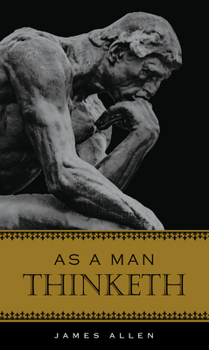
As A Man Thinketh ~ James Allen
Originally published: 1902
Description: “As a Man Thinketh” is a literary essay by James Allen, first published in 1902. In more than a century it has become an inspirational classic, selling millions of copies worldwide and bringing faith, inspiration, and self healing to all who have encountered it. The title comes from the Bible: “As a man thinketh in his heart, so is he.” — Proverbs, chapter 23, verse 7
Purchase: Amazon Books
The Forge of the Mind
The first time I read As a Man Thinketh, I didn’t realize how much weight those few pages carried. I treated it like a simple proverb in motion — a small piece of wisdom about positive thinking. Only later did I understand that James Allen wasn’t writing about optimism at all. He was writing about responsibility.
Every man becomes what he allows to take root in his mind. Thought, he says, is the seed from which character, circumstance, and destiny all grow. It’s an old idea: “As a man thinketh in his heart, so is he.” But Allen made it practical, even urgent. He showed that the mind is not a mirror but a forge.
When I first wrote about this book years ago, I summarized its ideas. Now, returning to it, I see how those same ideas have shaped my own seasons of discipline, growth, and recalibration. The book hasn’t changed — I have.
Thought and Character — The Seed of the Self
Allen begins where every man must: with the mind. Before habit, before action, before consequence, there is thought. He calls it the Master Power that molds and makes, the unseen hand shaping every outcome that follows.
Mind is the Master power that moulds and makes,
And Man is Mind, and evermore he takes
The tool of Thought, and, shaping what he wills,
Brings forth a thousand joys, a thousand ills:-
He thinks in secret, and it comes to pass:
Environment is but his looking-glass.
Allen believed this wasn’t poetry — it was law. The inner life precedes the outer one. What we dwell on quietly becomes what we live out publicly. Over time, our thoughts harden into character, and our character builds the structure of our days.
When I first read these lines, I thought about them in general terms. Now I see how personal they are. Every season of growth or stagnation I’ve experienced began first in my head. The mindset came before the movement. When I’ve disciplined my thoughts — guarded them, directed them — my life has followed suit. When I’ve let them drift, everything else has drifted too.
The man you are becoming is the sum of the thoughts you permit.
Circumstances — The Mirror Principle
Allen’s claim that “environment is but his looking-glass” stops you mid-page. It’s a bold reversal of how we tend to see life. Most of us think circumstances shape the man; Allen says the man shapes the circumstances.
That idea can sound naive until you sit with it. He’s not denying that hardship, injustice, or chance exist. He’s saying those things reveal what’s already inside us. The same storm that breaks one man can strengthen another. The difference lies in the inner life, not the outer weather.
It’s easy to live as if we’re at the mercy of whatever happens. Yet Allen’s point is clear: we build the very conditions we inhabit. Our surroundings, our habits, even the people we attract often echo the tone of our thinking.
There’s freedom in owning the mirror. If my environment reflects my mind, then change begins in thought, not in circumstance. That realization is both humbling and empowering — because it leaves no one else to blame and nothing outside my reach to improve.
Thought and Purpose — Direction Over Drift
Allen warns that a man without a central purpose drifts. He may work hard, even achieve much for a time, but without a fixed aim his life scatters. Energy without direction eventually burns itself out.
“They who have no central purpose in their life fall an easy prey to petty worries, fears, troubles, and self-pityings, all of which lead, just as surely as deliberately planned sins (though by a different route), to failure, unhappiness, and loss, for weakness cannot persist in a power-evolving universe.”
Purpose acts like gravity. It pulls every thought into orbit, keeping life from spinning apart. Without it, we live reactively, swayed by mood, circumstance, or the loudest voice in the room.
I’ve learned that purpose doesn’t have to be grand to be steady. It can be simple: to live with integrity, to pursue mastery in work, to protect what matters. When thought aligns with that purpose, the noise of lesser things fades.
Drift begins when we stop asking what we’re aiming toward. Direction begins the moment we ask again.
The Thought-Factor in Achievement — Strength and Responsibility
Allen’s view of achievement is blunt and unsentimental. Every victory and every failure, he says, begins in the mind.
“All that a man achieves and all that he fails to achieve is the direct result of his own thoughts.”
It’s not a comfortable truth, but it’s a freeing one. He doesn’t deny the influence of environment, upbringing, or talent. He simply refuses to let them carry the blame. Our inner state precedes our outer outcome.
I’ve seen this principle play out in every demanding pursuit — in physical training, creative work, or moral discipline. The moment my thinking turns passive, my effort weakens. But when my thoughts stay deliberate and focused, the work itself becomes a form of strength training.
Allen reminds us that the disciplined man takes ownership of both ends of the spectrum. My success and my failure are both mine. I can’t credit others for the one or accuse them for the other. Responsibility is the dividing line between the man who drifts and the man who grows.
Achievement isn’t just a matter of skill. It’s the outer reflection of an inner order — thought mastered, purpose held, effort aligned.
Vision and Ideals — The Compass of the Heart
Allen lifts his gaze here, from effort to imagination. Thought creates the framework, but vision gives it shape and direction.
“He who cherishes a beautiful vision, a lofty ideal in his heart, will one day realize it.”
That simple line carries the weight of both Scripture and experience. “Without a vision, the people perish.” Allen understood that we move toward what we picture most clearly. Our ideals act as a compass, quietly steering us through distraction and fatigue.
Every man needs a vision to aim at — something higher than comfort or success. It’s not about fantasy or wishful thinking; it’s about holding an image of the man you want to become, and letting that vision guide the decisions you make today.
When I lose sight of that inner picture, my work becomes mechanical. But when I remember it — when I hold that image in view — discipline turns to devotion. Vision gives purpose its heartbeat.
Serenity — Calm as Strength
“Calmness of mind is one of the beautiful jewels of wisdom. It is the result of long and patient effort in self-control. Its presence is an indication of ripened experience, and of a more than ordinary knowledge of the laws and operations of thought.”
Allen closes with quiet power. After the labor of discipline and direction, he arrives at calm — not as escape, but as mastery. Serenity, he says, is the fruit of governed thought. It’s what remains when the noise has been trained to obey.
Peace of mind isn’t softness. It’s strength under control. It’s the composure that comes when you no longer react to every gust of circumstance. The world mistakes rest for retreat, but Allen understood it as readiness.
When I look back at the seasons when my mind has been calm, they’ve always followed a time of order — not ease. Serenity doesn’t grow in comfort. It grows in the soil of self-control, where thought and purpose have been tested and proved.
The disciplined mind becomes a quiet force. It doesn’t need to announce itself. It simply endures.
The Practice of Thought
As a Man Thinketh is more than a book; it’s a mirror held to the inner life. A man could read it in an hour and spend the rest of his life living it out. Its pages aren’t meant to entertain but to expose — to show where our thinking has been careless, where it’s been small, and where it’s quietly shaping the life we see.
Allen’s words remind me that discipline begins in the unseen. Before we train the body, we train the mind. Before we build habits, we decide what kind of man we intend to become. The outer life will always follow the inner pattern.
Reading this book again after nearly a decade, I see it less as philosophy and more as practice. The daily work is simple but demanding: to watch our thoughts, to guard what we allow in, to plant what we hope will grow.
“As he thinketh in his heart, so is he.”
That’s not just Scripture or poetry — it’s instruction. Train your thoughts like muscle and prayer: daily, deliberately, and with purpose.


 Chase The Kangaroo
Leave a comment